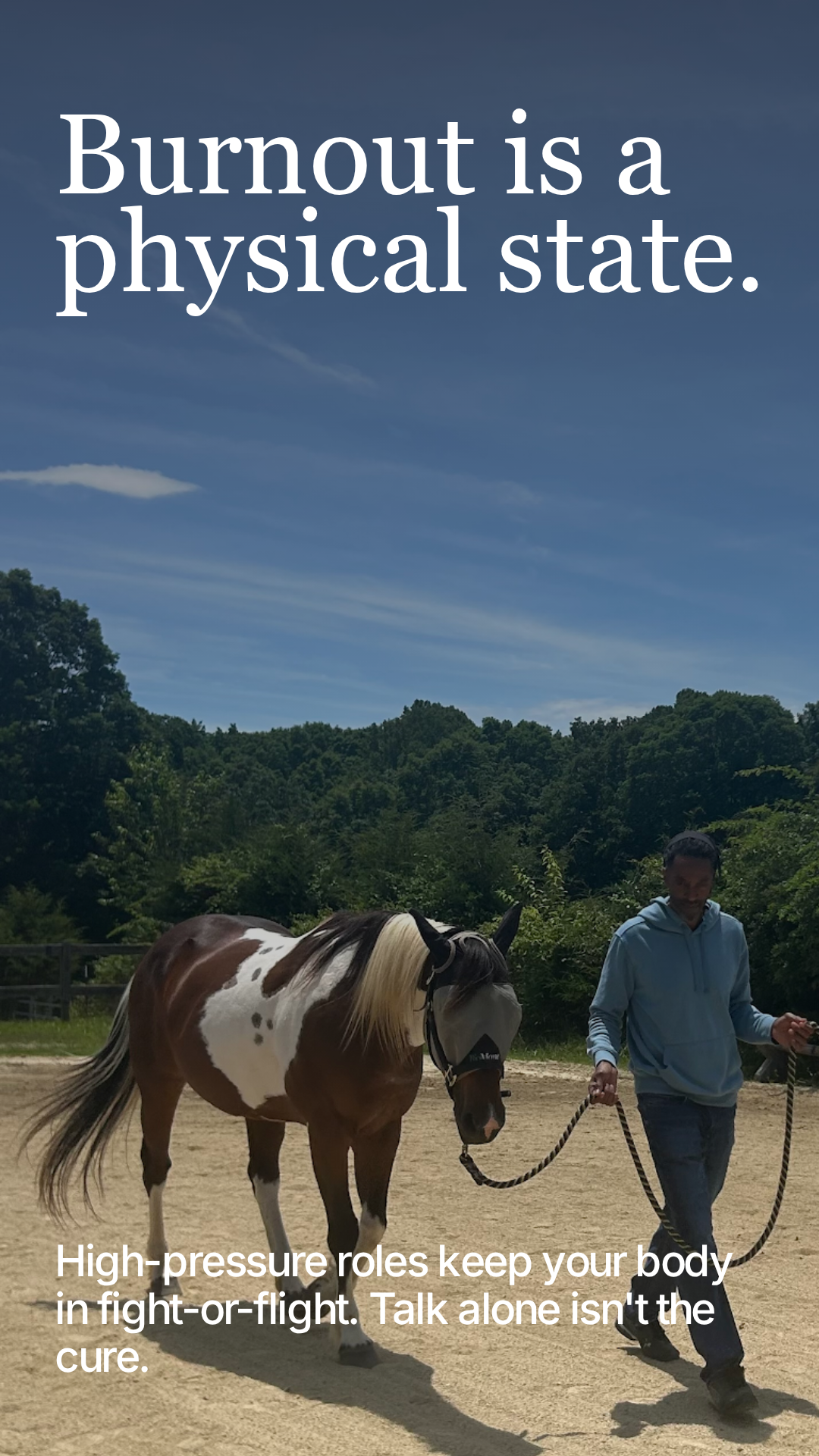
Why Horses and Veterans
For many veterans returning from service, traditional talk therapy feels inadequate. Sitting in an office, facing a stranger, and narrating traumatic experiences can feel disconnected from the embodied reality of what they have lived through. Equine-assisted interventions offer something fundamentally different: a nonverbal, body-based experience that meets veterans where they are.
Horses are uniquely suited to this work. As prey animals, they are hypervigilant — constantly scanning their environment for threats. Veterans with PTSD share this heightened state of alertness. When a veteran stands beside a horse, there is an unspoken recognition: both beings understand what it means to live in a state of readiness.
1. Reduced PTSD Symptom Severity
A 2021 study published in Military Medical Research found that veterans who participated in an 8-week equine-assisted therapy program showed statistically significant reductions in PTSD Checklist (PCL-5) scores compared to a waitlist control group. Participants reported fewer intrusive thoughts, reduced hyperarousal, and improved sleep quality.
The mechanism appears to involve co-regulation: the horse's calm, regulated nervous system helps down-regulate the veteran's stress response. Over repeated sessions, veterans develop the capacity to access a calmer physiological state on their own.
2. Improved Emotional Regulation
Horses respond to human emotional states in real time. When a veteran approaches a horse while carrying tension, anger, or fear, the horse's behavior changes — it may step away, raise its head, or become restless. This immediate feedback helps veterans develop awareness of their own emotional states and practice regulation strategies.
Research from the Journal of Traumatic Stress has documented improvements in emotional regulation among veterans participating in equine-assisted programs, with gains maintained at 3-month follow-up.
3. Restored Sense of Trust and Connection
Combat trauma often damages a veteran's ability to trust — both others and themselves. The horse-human relationship offers a unique pathway to rebuilding trust. Horses are non-judgmental, consistent, and honest. They do not carry agendas or expectations. For veterans who struggle with human relationships, the horse can serve as a safe bridge back to connection.
Many programs report that veterans who initially resist group therapy will engage readily in equine-assisted sessions, often forming bonds with specific horses that become anchors for their healing process.
4. Physical Benefits and Embodiment
PTSD is not only a psychological condition — it lives in the body. Veterans often experience chronic muscle tension, pain, dissociation, and difficulty with physical coordination. Working with horses requires full-body engagement: grooming, leading, and riding all demand physical presence and awareness.
Hippotherapy (therapy using the horse's movement) has been shown to improve balance, core strength, and proprioception. Even ground-based activities like grooming and leading require veterans to be physically present and attuned to the horse, counteracting the dissociation that often accompanies PTSD.
5. Meaningful Purpose and Community
Many veterans struggle with loss of purpose after leaving the military. Equine-assisted programs provide structure, responsibility, and a sense of mission. Caring for a horse — feeding, grooming, and maintaining its environment — gives veterans a daily purpose that extends beyond themselves.
Several programs, including the Saratoga WarHorse program and the Man O' War Project at Columbia University, have documented improvements in veterans' sense of meaning and social connectedness following equine-assisted interventions.
Finding Equine Therapy for Veterans
Many equine therapy centers offer programs specifically designed for veterans, often at reduced cost or free of charge through grants and nonprofit funding. When searching for a program, look for:
- Providers with veteran-specific experience — ask about their training and track record with military populations
- Programs that include both mounted and ground-based activities — the combination often produces the best outcomes
- Centers that prioritize horse welfare — ethical treatment of the horses is a marker of program quality
Search for veteran-focused equine therapy providers in your area using the Horse Therapy Finder directory.